Visualizzazione post con etichetta libro. Mostra tutti i post

mercoledì 10 aprile 2013

Fiera del libro 2013


No, non sono stata attenta quest'anno! Non ho spulciato gli stand della Fiera internazionale del libro di Bologna alla ricerca di libri sulla sessualità dei/per bambini ma posso annotare qui qualche avvistamento. Innanzi tutto sono tornata a casa con un bel libro. Si chiama "Dictionnaire fou du corps" e ha vinto il Bolognaragazzi award 2013. È il frutto di un lavoro di 5 anni  durante i quali l'autrice e illustratrice, Kati Cuprie, ha avuto modo di studiare e conoscere a fondo l'anatomia umana grazie ad una stretta collaborazione con il museo anatomico di Bologna e un docente di Anatomia Umana, nonché direttore del Museo delle Cere Anatomiche “Luigi Cattaneo” ovvero: Alessandro Ruggeri.
Sono stata alla presentazione del libro nel suggestivo Teatro Anatomico Archiginnasio a Bologna e ho potuto sentire quanta passione, ricerca e consapevolezza è presente in quest'opera. Come ha spiegato il professore, tutte le immagini di Kati Cuprie sono precise dal punto di vista anatomico, dopo un lungo studio le conoscenze scientifiche si sono unite all'interpretazione personale.
Una delle sfide del libro consisteva nel trovare l'unione e l'armonia di contenuti così diversi per tecniche e stili, sono immagini sempre differenti più o meno precise, mosse, delicate, forti ... Penso che sia un libro riuscito. Parla del corpo e ne parla in tanti modi, devo ancora leggere a fondo il testo ma posso dire che le parti scientifiche e quelle romantiche-soggettive si alternano e completano molto bene.
Non so se in italiano uscirà mai, chi potrebbe prendersene cura? In Francia l'editore è Thierry Magnier 
Segnalo poi una mostra ancora in corso, sempre all'Archiginnasio che resterà aperta fino al 27 aprile 2013. Si tratta di una mostra bibliografica sul tema della famiglia. "Famiglie. Papà, mamme, fratelli, zii, nonni, cugini e amici  Libri per ragazzi e omogenitorialità "
Un percorso lungo quattro pannelli, quanti sono i macrotemi trattati con all'interno diversi titoli di libri consultabili sul posto. Condivido qui le immagini con le copertine dei libri che ho fatto in tempo a fotografare.


mercoledì 1 febbraio 2012

In Salaborsa a Bologna

Alcune scansioni dal libro: "Come nascono i bambini? illustrato da Blake Hamilton.
La riproduzione e la nascita di piante, galline, cani e uomini.


venerdì 20 gennaio 2012

Warja Lavater

 A Bela Adormecida (La Belle au Bois dormant)
Adrian Maeght, editor


mercoledì 18 gennaio 2012

Astratto

Il lavoro di Stéphane Ebner, ho avuto modo di vederlo nei due libri pubblicati da Les éditions Esperluète (casa editrice belga)
Réserve
Souffle
ecco delle immagini che ho trovato sul web


http://editionsesperluete.wordpress.com/la-maison/evenements/

lunedì 16 gennaio 2012

Prefazione Di Bruno Bettelheim_ Le favole di Federico di Leo Lionni

Perché ai bambini piacciono tanto i libri illustrati? che valore vi attribuiscono, quale fascino ne subiscono?

La realtà,oggettiva esercita ben poca attrazione su un bambino che ancora non può comprenderla appieno, certo non in modo soddisfacente. Per quanta pazienza un genitore impieghi nello spiegare certe cose al figlio, quest'ultimo ne affemerà, nella migliore delle ipotesi, appena qualche frammento.

lunedì 9 gennaio 2012

La Bella e la Bestia


traduzione di Carlo Collodi da "I racconti delle fate"
da un testo di M.me Beaumont 1756

C'era una volta un mercante che era ricco sfondato. Aveva sei figliuoli, tre maschi e tre femmine; e siccome era un uomo che sapeva il vivere del mondo, non risparmiò nulla per educarli e diede loro ogni sorta di maestri. Le sue figlie erano bellissime: la minore soprattutto era una maraviglia, e da piccola la chiamavano la bella bambina, e di qui le rimase il soprannome di Bella, che fu poi cagione di gran gelosia per le sue sorelle.

lunedì 19 dicembre 2011

Semi di bambino


Graine de bébé: mais par où passent les bébés?
texte de Thierry Lenain; ill. de Serge Bloch
Paris : Nathan
Un libro davvero interessante, presto aggiungerò delle immagini.
Risponde a due domande semplici: da dove siamo nati e come siamo entrati nella pancia della mamma??
Ha due copertine e legge in entrambi i versi, e tiene conto delle due curiosità piu semplici che puo avere un bambino.

Le mystère des graines à bébé
Serge Tisseron, Aurélie Guillerey.
Paris A. Michel jeunesse


Libri trovati dal sito:
Donor Offspring : Books for Children: Books for parents to help explain conception to their children who were conceived via Assisted Reproductive Technology: In Vitro Fertilization, Donor Egg, Donor Sperm, Donor Embryo, Surrogacy or Gestational Carrier

martedì 13 dicembre 2011

Nicola Davies talks about non-fiction


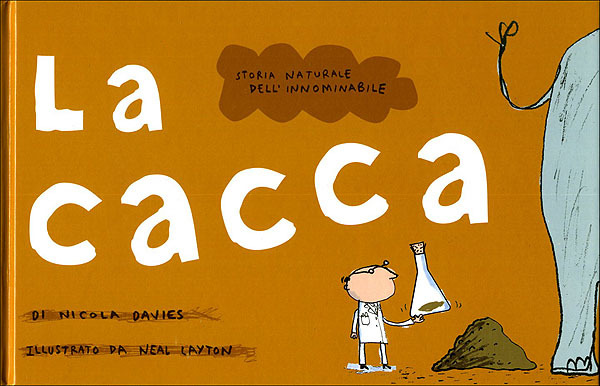
 Breve intervista all'autore di


Interessante è capire l'approccio di un libro non fiction e nel caso dei suoi libri la capacità di fare un confronto con il mondo animale.

Molti suoi libri sono stati illustrati da Neal Layton


ecco l'intervista (dal sito)


1 Do you prefer writing non fiction or fiction? 
I really like writing both. When I've been writing fiction for a while I'm always glad to get back to non fiction, and vice versa. I don’t think there’s that much difference between writing fiction and non fiction – you have to engage your audience, communicate with them, with both. What all writing boils down to is the delivery of information; in fiction, the source of that information come from your head and in non fiction the source of that information is rooted in the reality of what the world is really like. Of course there's an awful lot of overlap between the two – a fictional framework can hold within it the reality of the solid and factual world, and the solid factual world can be spun into something magical, strange and unreal. I suppose that's why I like both genres, because I can play around with that borderline. But with both fiction and non fiction I want to make my readers excited, stirred up. When I'm writing non fiction I want them to feel the buzz that simply knowing stuff gave me as a little girl – and still gives me now – and I want them to feel delight in the natural world. When I'm writing fiction I want them to feel that delight in life itself, in the challenge and adventure of living and in finding out about their own capabilities and limits and how that fits with the big world.

2 Why is non fiction important for children?
Good quality non fiction is more important now than it's ever been. Children have access to a wildwood of unprocessed information via the Internet, information which is often inaccurate, poorly presented and packaged in a way that is utterly unsuitable for children. What non fiction offers children is a route through that tangle at the right pace for their age. It gives them interesting, thought-provoking connections that invite them to explore and make connections of their own. The lovely thing about a book is that as a reader it's utterly yours, utterly personal, and you can take its pages at any pace, in any order you like. Unfortunately, some of what is termed children's non fiction are simply what I call “tile grouting” books, pictures with words squirted around them like the grouting round tiles. These books don't invite readers to engage with either text or pictures, they just look quite pretty and deliver nothing except a bit of profit to the publishers.

3 Where do you get your ideas from for non fiction books?
It sounds a bit airy-fairy to say “from nature”, as though I drift through meadows picking buttercups, dressed in a diaphanous frock. But the true answer is “from nature” – from the experience of seeing animals in the wild in their natural habitats and from my lifelong passion for the science of zoology, the great jigsaw of evolution, and how they fit together. Sometimes I'll read a new piece of research, some new discovery of what an animal gets up to and that will spark off an idea. Sometimes they arrive from a sight or sound that lodged itself in my mind long ago that suddenly pops up to the surface and demands attention. Sometimes they arrive by talking. I have a very old friend who is a Professor of Zoology, and last year we were in the Sea of Cortez studying sperm whales and chatting a lot about the dolphins we could see, which were always doing amazing jumps and acrobatics, almost as if they wanted to distract us. We talked about “what if a dolphin was born sensible?” and an idea for a book was born – but it may be ages before I write it.

4 What do you see as the future for non fiction writing for children?
It's getting harder and harder for writers to get non fiction for children published, because there is the perception that now we have the Internet we don't need it. No one for a moment suggests that adult travel, historical, science and biography writers should stop writing because we can look it all up on Google. There is a recognition that non fiction for grown-ups has value, that the input of the writer's voice is worthwhile. That simply isn't there when it comes to children's non fiction writing and until that changes we will be in danger of letting our young people drown in ignorance, floating on a sea of “tile grouting” books and web pages.

5 What non fiction books did you love growing up?
I spent hours pouring over the human physiology pages at the back of my dad's Encyclopaedia Britannica. He had the belief – like many working-class Welshmen of his generation – that education would get you anywhere. So he bought a complete set of encyclopaedias. Those pages, with the illustrations of human bodies on acetate so you could peel the body from skin to bone, layer by layer, fascinated me. I can shut my eyes and see them still and feel the thrill they gave me. I was given The Observer’s Book of Birds’ Eggs for my seventh birthday and I remember looking at it in bed when I had measles. The pictures of birds and their eggs (magical things) hypnotised me. I stared at them, wishing and wishing I could see them for real. I was ill a lot as a kid and during another long bout of being in bed my dad got me Marvels and Mysteries of Our Animal World, a series of non-fiction anecdotes about animals in the wild with great photographs. I read and re-read every single story in that book. And all of Gerald Durrell’s books about his trips to Africa and South America. Just thinking of those books now makes me happy. They were full of fun, and had a powerful sense of place and of the people he met, but also gorgeous descriptions of the animals. I wanted to be him so badly when I was eleven. And, last but not least, two things I read as a teenager, J.A Baker's The Peregrine – a story of passion for landscape and birds – and D.H Lawrence’s animal poems. The clarity and delight expressed in his animal poems has given me images that have lasted a lifetime in my heart.

venerdì 9 dicembre 2011

Appunti salone_1


La casa editrice helium ha pubblicato questo piccolo libretto: "La mia piccola storia prima di essere nato" trovo abbia per certi aspetti delle mancanze tutto è incentrato sul feto la sua crescita e il racconto dell'atto sessuale viene dimenticato. Le illustrazioni sono poco figurative e se da un lato trovo la ricerca interessante, rimane aperta la domanda di cosa un bambino percepisca di queste immagini ovvero può un libro con delle immagini tanto astratte essere di sostegno al desiderio di conoscenza di un bambino?


Sempre tra i libri di helium c'è "Una vita esemplare" illustrato da Floc'h, una sorta di ritratto di famiglia composta da un papà, la figlia e un coniglietto. Penso che la sola scelta dei personaggi aiuti l'immedesimazione del lettore, le illustrazioni intelligenti di Floc'h fanno il resto,mi ha conquistato! Infatti vorrei rivederlo anche se non tratta di sessualità ma di rapporti umani.
(grazie maffi che me lo hai fatto scoprire!)

Appunti salone_2

Casa editrice l'initiale: cercando di comprendere temi complessi, il rischio è un eccessiva semplificazione.


giovedì 8 dicembre 2011

Appunti salone_3

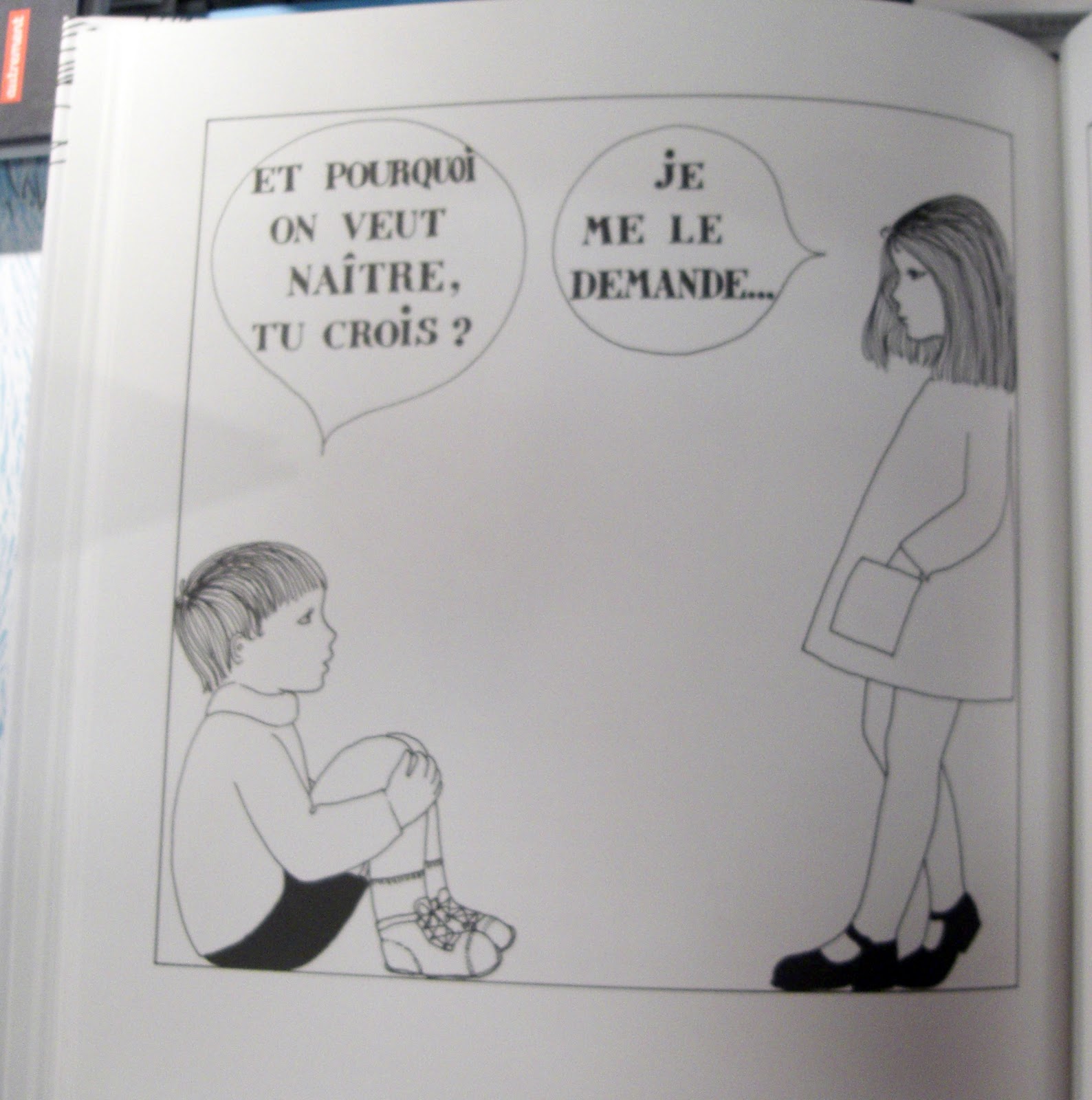
Casa editrice autrement
illustrato da Agnès ROSENSTIEHL

Interessante, strutturato a dialogo tra bambini e adulti.


Appunti salone_4

 Mamangue e papaye

Metamorfosi:
mango-donna in cinta-donna con una bambina per mano
papaya-feto-bambino-uomo con bambino in braccio

Visivamente le trasformazioni sono avvincenti ma il significato ultimo del libro non lo trovo veramente interessante. Perchè non pensare a unire questi due libri o a renderli ciclici o comunque a trovare una formula che suggersca l'idea di un unione.
Un libro che funziona solo all'apparenza.

http://www.editionschandeigne.fr/ShowProduct.aspx?ID=859


sabato 26 novembre 2011

Dentro me

-Non sono sempre stato io. Prima di essere io, non ero in me. Ero altrove. Ma non ero il re, dentro di me. Non ancora. Dentro di me c era la notte-